A few days after Kimi K3 launched, Moonshot AI made the kind of admission technology companies usually enjoy making: demand had outrun infrastructure. New subscriptions were temporarily suspended. A queue is not proof of model quality, but in this case it reflected a larger shift.
Moonshot presented a system that approached leading closed models in its own tests and several independent evaluations, then published the complete weights. The release turned the argument over open AI from an ideological question into an economic one: what happens when a controllable model is good enough and materially cheaper than the absolute leader?
What 2.8 trillion parameters mean
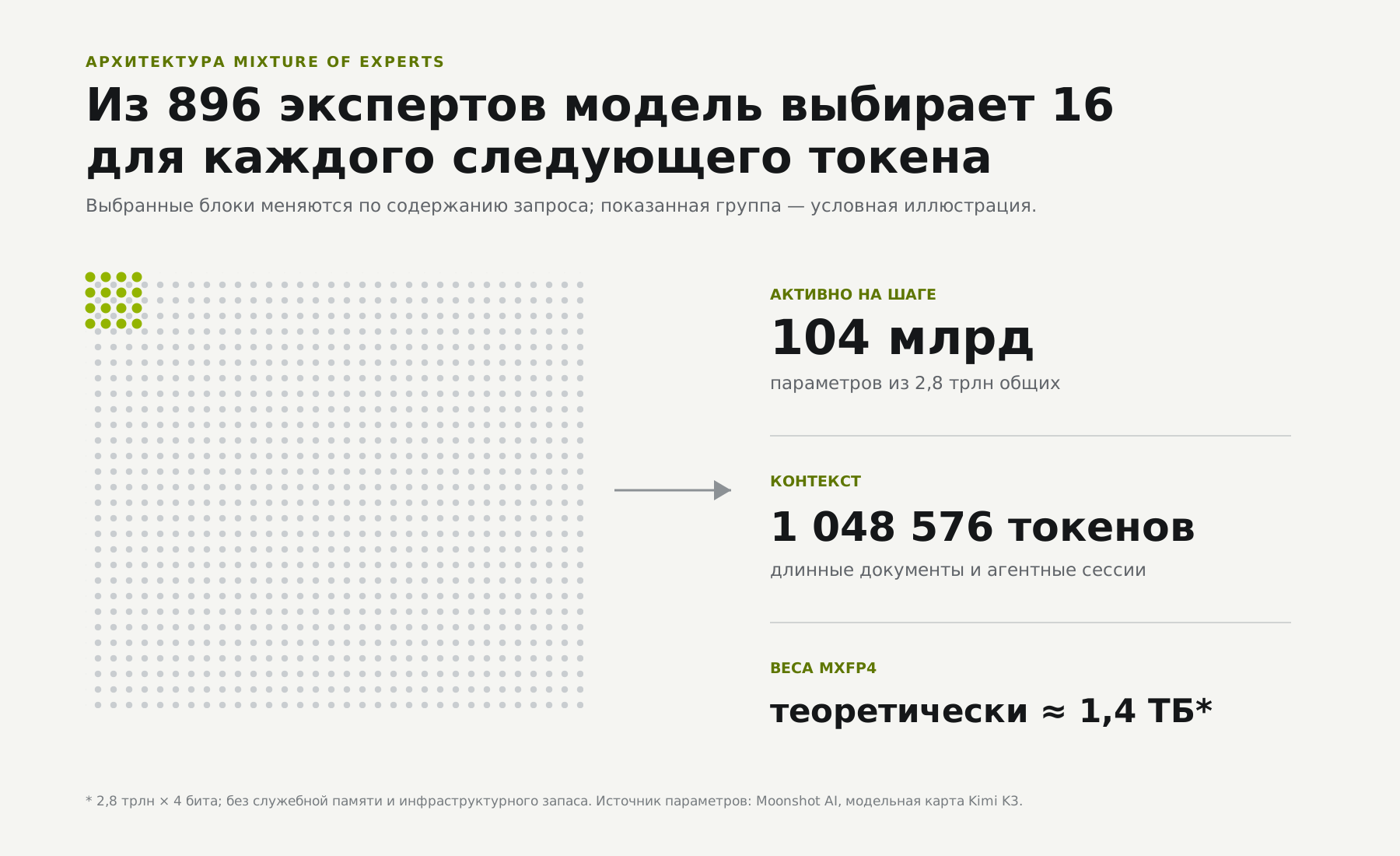
The headline number is 2.8 trillion parameters. Kimi K3, however, uses a mixture-of-experts architecture. A router activates 16 of 896 experts for each token, leaving roughly 104 billion parameters active during inference.
That is still a formidable workload, but it is fundamentally different from activating the full network at every step. Kimi Delta Attention and Attention Residuals are designed to support long sequences and a stable sparse network. The context window reaches 1,048,576 tokens, and the model is built for multimodal, tool-driven work rather than a single polished chat response.
The benchmark is part of the product
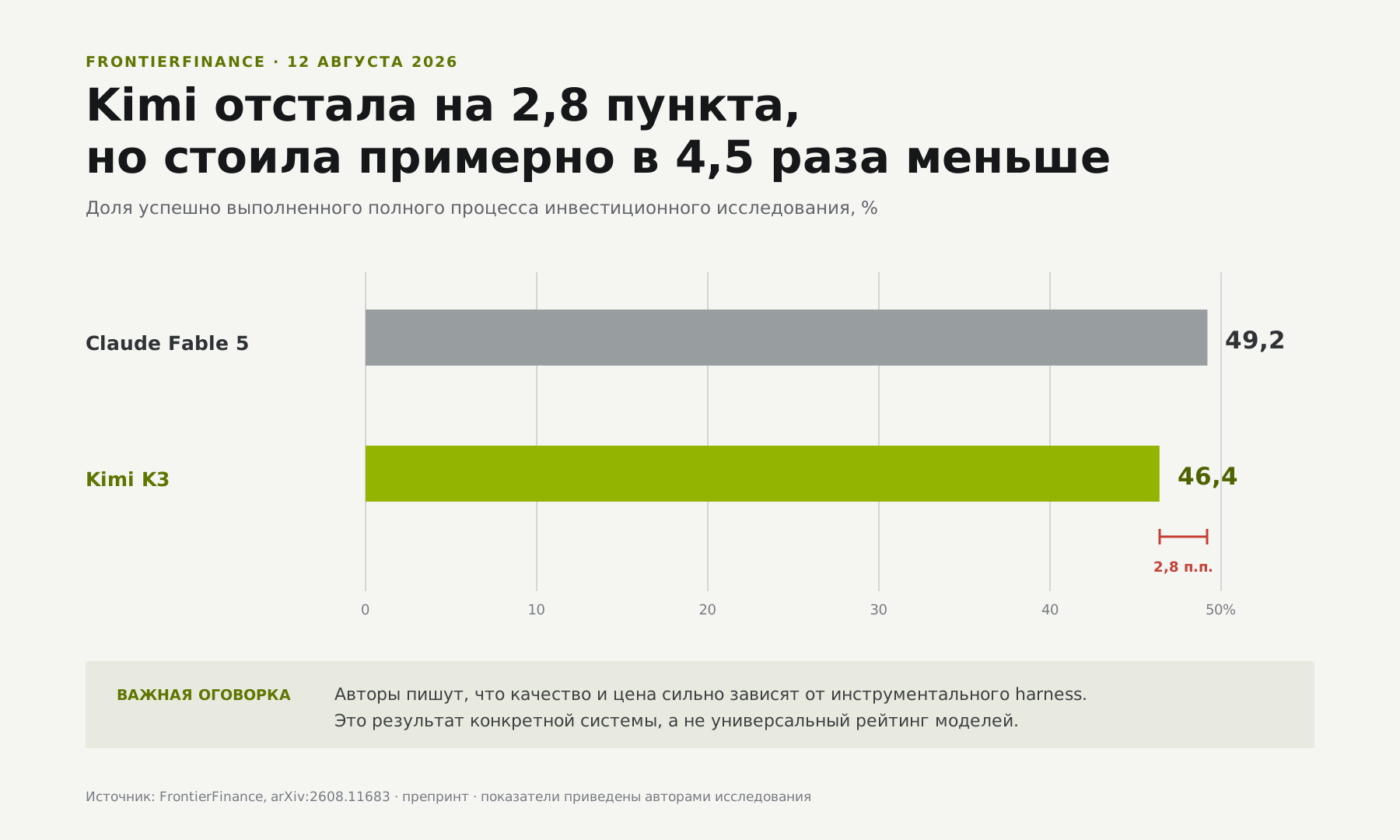
Moonshot’s launch table placed Kimi K3 near the frontier on scientific reasoning, terminal work and coding. Such tables resemble a precise league, although agentic models rarely compete under identical conditions. The result belongs not only to the weights, but also to the harness: tools, context policy, step budget and the software that decides what the model sees next.
An independent FrontierFinance evaluation made the trade-off clearer. Claude Fable 5 led the closed models at 49.2 percent. Kimi K3, the strongest open-weight system, reached 46.4 percent at an estimated 4.5 times lower cost. The quality gap remained, but became small enough to change a buyer’s decision.
When the model leaves the leaderboard
Practical comparisons reveal a useful profile rather than a universal winner. In a Tom’s Guide set of 15 difficult prompts, Kimi tended to excel at detailed engineering architecture, formal schemas and implementation plans. The same appetite for completeness could become speculative precision when it supplied convincing numbers that were still assumptions.
Long context is also not bottomless memory. Moonshot’s API guidance requires an agent to preserve previous reasoning content and tool calls. If the surrounding application discards that history or compresses it carelessly, the quality of a long session can fall even when the nominal context window remains enormous.
Open weights behind the data-centre door
Moonshot released the complete weights under its own licence. That allows organisations to inspect, fine-tune and deploy the model without relying on a single API. It does not make K3 a desktop model.
At four bits per parameter, 2.8 trillion parameters imply a theoretical minimum of about 1.4 terabytes for the weights alone. A real deployment also needs working memory, routing structures, multiple accelerators and fast interconnects. This is organisational portability for cloud providers, large companies and research institutions—not personal computing in the usual open-source sense.
China’s strategy changes the price of intelligence
Moonshot is part of a broader Chinese strategy that competes through accessible weights, release speed and operating cost as well as peak capability. Most corporate workloads do not require the smartest model available for every request. A cheaper system that reliably extracts data, writes code and uses tools can alter procurement even if it is second or third on a leaderboard.
Closed laboratories retain major advantages in ecosystems, interfaces and top-end performance. Kimi K3 attacks a different part of the market: the price of sufficient quality and the ability to move workloads between providers.
What Kimi K3 means in practice
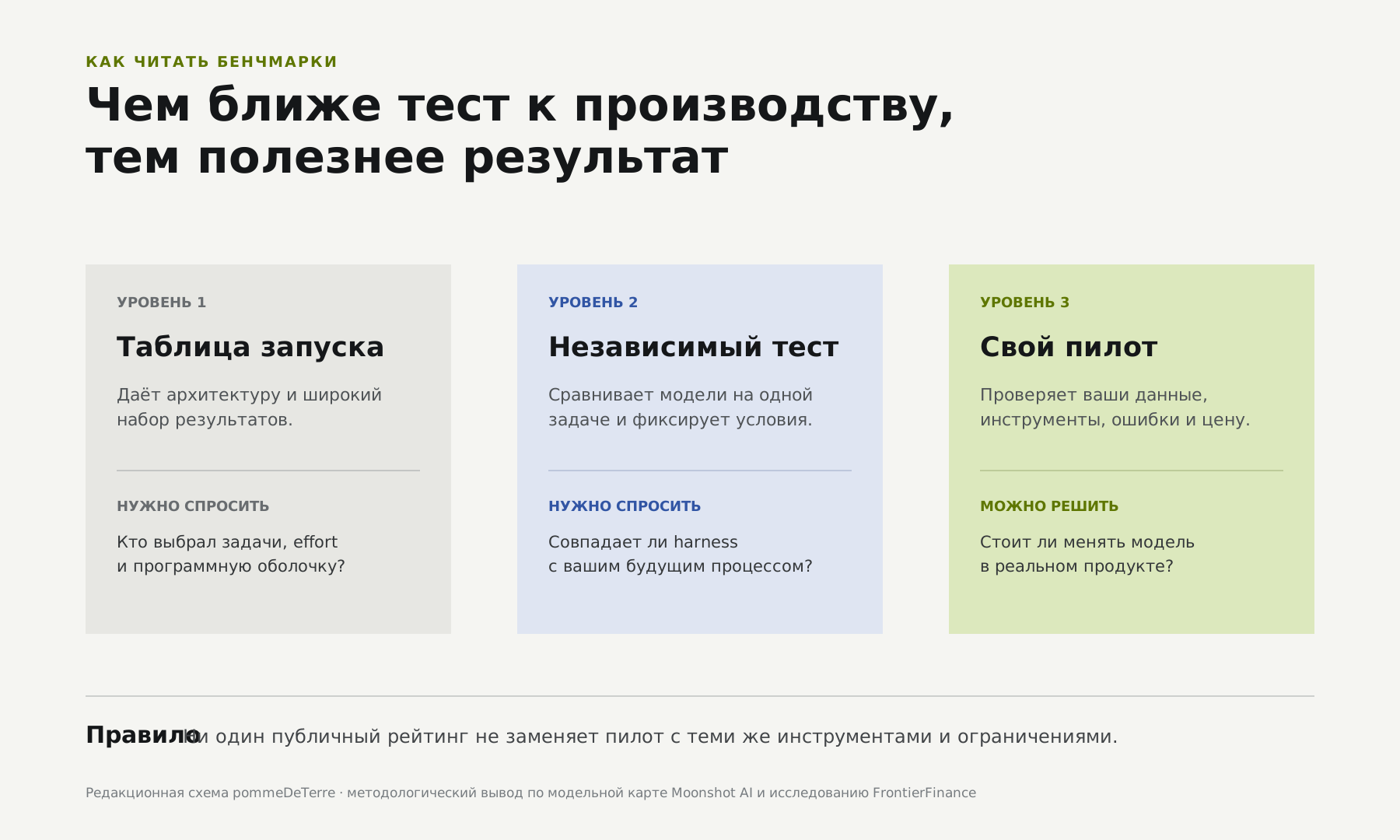
For developers, K3 is a candidate for a controlled pilot, not an automatic replacement. It should be evaluated on the actual repositories, documents and tool chain intended for production. A chat comparison says little about the stability of a hundred-step agent workflow.
For businesses, the useful question is where the best closed intelligence is genuinely necessary and where a cheaper, controllable model is enough. The likely answer is a mixed architecture: sensitive decisions routed to a cautious frontier model, high-volume technical work sent to Kimi, and regulated processes kept inside controlled infrastructure.
The queue and the promise
Kimi K3 did not prove that open-weight models have defeated closed ones. It proved something more practical: the distance has become small enough for cost, control and deployment freedom to enter the main conversation.
In an industry accustomed to measuring progress by first place, second or third place with different economics can sometimes change the market more than another record.
For a company, the practical next step is a limited pilot on its own data rather than an immediate migration of every workflow. The pilot should measure real tasks, design deployment inside the organisation’s infrastructure, and define permissions, action logs, cost ceilings, failure monitoring and rollback. Only then can the company decide whether control over the model creates enough value for a full implementation.
Sources
- Moonshot AI: official Kimi K3 repository and model card
- Kimi K3 technical report
- Hugging Face: official Kimi K3 weights
- Associated Press: demand and subscription pause
- Axios: Kimi K3 and open-weight competition
- FrontierFinance: independent financial-agent evaluation
- Tom’s Guide: 15 practical Kimi K3 and Claude Opus 5 tasks