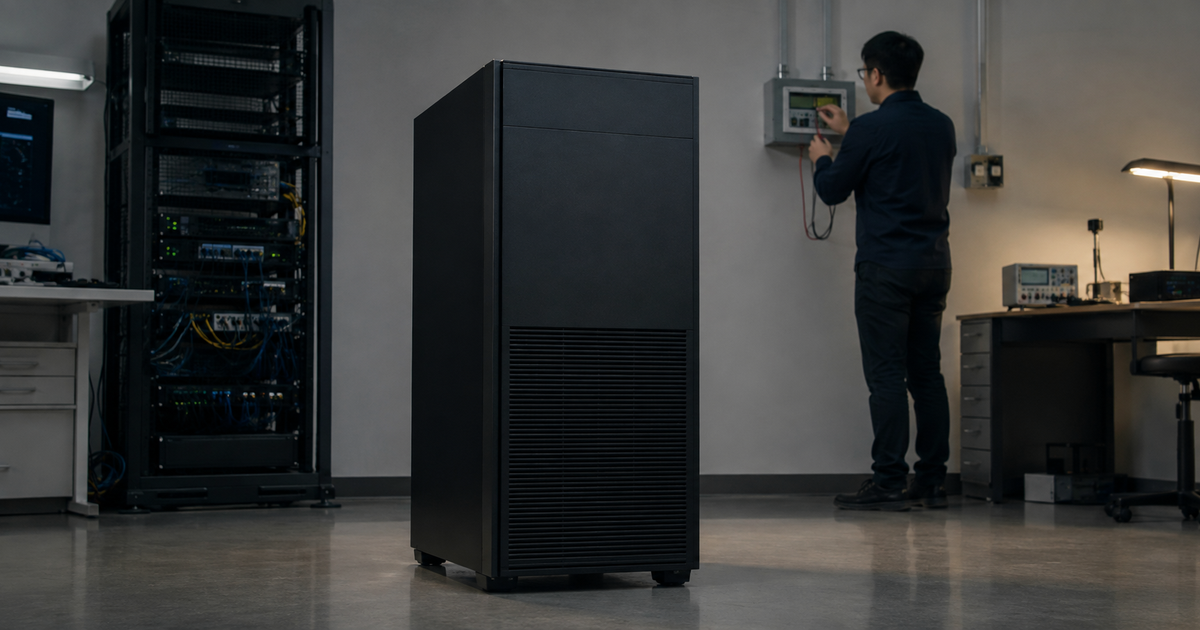
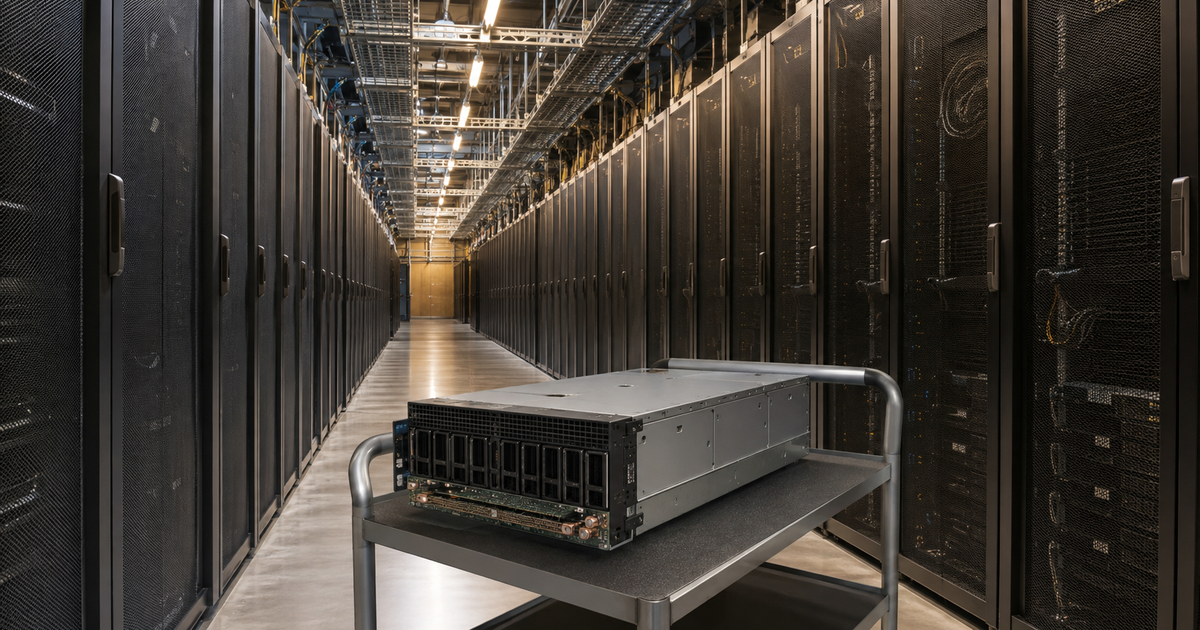
The query “buy Huawei Atlas 950 in Russia” already sounds commercial, but it is ahead of the product. As Huawei reported, Atlas 950 SuperPoD shipments are planned to begin in Q4 2026. In July, the company displayed in Shanghai a physical configuration of 1,024 Ascend 950 neural processing units. That is meaningful evidence that the system exists, but it is not a price, a Russian delivery commitment, or a comparative benchmark.
In September 2025, Huawei introduced Atlas 950 as a system designed to support up to 8,192 Ascend NPUs; in spring 2026, the company showed the line outside China for the first time. One thousand and twenty-four is the scale of the Shanghai demonstration. Eight thousand, one hundred and ninety-two is the product’s stated maximum. For a procurement team, these are different maturity stages, and neither proves the availability, price, warranty, or service terms of a particular configuration in Russia.
A company does not need to wait for a catalogue listing before starting the project. It can define its workload, run a pilot on currently available earlier-generation Ascend systems, assess the cost of moving models from CUDA, and prepare data-centre requirements. A local integrator can then source a validated configuration with explicit delivery, support, and exit terms rather than an abstract “Chinese AI server.”
When Atlas 950 can be ordered
Huawei’s roadmap gives Q4 2026 as the start of Atlas 950 SuperPoD availability. That is a global vendor milestone, not a promise that every Russian customer can receive a chosen configuration on a particular date. The configuration, import route, lead time, payment, warranty, spare parts, and update rights all need to be confirmed in a supplier’s commercial offer.
| Date | Event | Meaning for procurement |
|---|---|---|
| September 2025 | Atlas 950 announced at a scale of up to 8,192 NPUs. | A specification and roadmap, not inventory ready to ship. |
| March 2026 | First display of the system outside China. | International promotion began without published delivery terms. |
| July 17, 2026 | A 1,024-Ascend-950 configuration was shown at WAIC. | A physical display was confirmed; independent performance was not. |
| Q4 2026 | Huawei’s planned start of availability. | Price, timing, warranty, and pilot terms must be fixed in a supplier offer. |
LightCounting described the Shanghai exhibit as joining 1,024 Ascend 950 chips through UnifiedBus 2.0 and a hybrid Mesh/Clos network architecture. That supports the conclusion that the exhibit was not an empty mock-up, but it does not prove the behaviour of a full 8,192-NPU configuration. An early buyer should request access to a pilot or demonstration environment and tie any decision to results from its own model rather than reserve budget against presentation figures.
The most important component may be invisible
That is why Huawei’s Atlas 950 description emphasizes not only Ascend 950, but UnifiedBus 2.0, the interconnect for a SuperPoD. The company says it is intended to provide very high bandwidth, low latency, and a unified memory address space. “Unified” describes the intended operating model: thousands of devices should appear to the software system more like one machine than a loose collection of servers.
It is a rational response to a real engineering problem. As agentic systems and long-context models grow, the cost of latency between accelerators can become as important as computation inside each one. But Huawei’s described properties remain vendor characteristics until independent teams publish comparable measurements of bandwidth, energy use, and performance across the same set of models.
Why this is not an honest “Nvidia killer” story
The story has an obvious geopolitical setting. In an Associated Press report, journalists connect Huawei’s strategy to US export restrictions on the most powerful American semiconductors for China: when the best available chips cannot be obtained at the required volume, individual constraints must be offset by cluster scale, interconnect, and coordinated hardware-software design. That explains the architecture’s direction. It does not establish a performance victory.
| A buyer’s question | What is known now | What is still missing |
|---|---|---|
| What scale was displayed? | A 1,024-Ascend-950 cluster was shown at WAIC. | A public independent report on a full Atlas 950 configuration. |
| What is the stated maximum? | Huawei specifies up to 8,192 Ascend NPUs for Atlas 950. | Proof that the scale wins on the same task. |
| Can it replace another platform? | Huawei has its own interconnect and software ecosystem. | Comparable TCO, reliability, and migration cost for a particular company. |
The word “replace” is especially dangerous. Companies do not buy an abstract peak number. They buy the ability to train a required model, serve a stream of requests, connect observability, and find an engineer who can resolve an incident in time. One customer’s limit will be hardware availability, another’s CUDA migration, and a third’s electricity and cooling bill. Atlas 950 may be a competitive alternative in some of these situations, but those are separate tests, not a single sporting score.
Hardware has a second half: software
Huawei does not conceal that dependency. In its 2025 annual report, the company writes about opening UnifiedBus 2.0 specifications and the source code of CANN, the software layer for Ascend compute. Open source can reduce dependence on a single supplier and let a community repair defects. Opening a repository, however, is not the same thing as a mature ecosystem of libraries, profilers, training material, and operations specialists.
A useful warning comes from a July study by researchers who worked not with Atlas 950, but with an earlier 16-device Ascend 910 system. The authors describe running a large mixture-of-experts model and a multimodal benchmark through CANN and vLLM-Ascend. They report having to make twelve source-level plugin patches and disable some high-throughput features for numerical correctness and stability. This is not an Atlas 950 test or proof of an Atlas 950 defect; it is a specific experience on a different hardware generation. It does show why hardware promises cannot be separated from the condition of the tools around them.
That is where the questions rarely found in a press release begin: which framework versions support the required model, how visible the performance profile is, what recovery after a node failure looks like, whether an agent harness can move over, and who owns updates. For enterprise AI, these are not a postscript to procurement. They are part of the product.
What a local integrator can do now
Work with a local customer starts with a technical brief, not an order for 160 cabinets. For most companies, the first stage will be a small environment for one model’s inference, fine-tuning on private documents, or processing a fixed request flow. An integrator can compare that workload across currently available Ascend servers, Nvidia and AMD alternatives, and the future Atlas 950 under one test protocol.
- Fix the model, framework version, context length, concurrent-request count, SLA, and acceptable latency.
- Run the company workload and calculate TCO: hardware, delivery, electricity, cooling, network, downtime, and engineering labour.
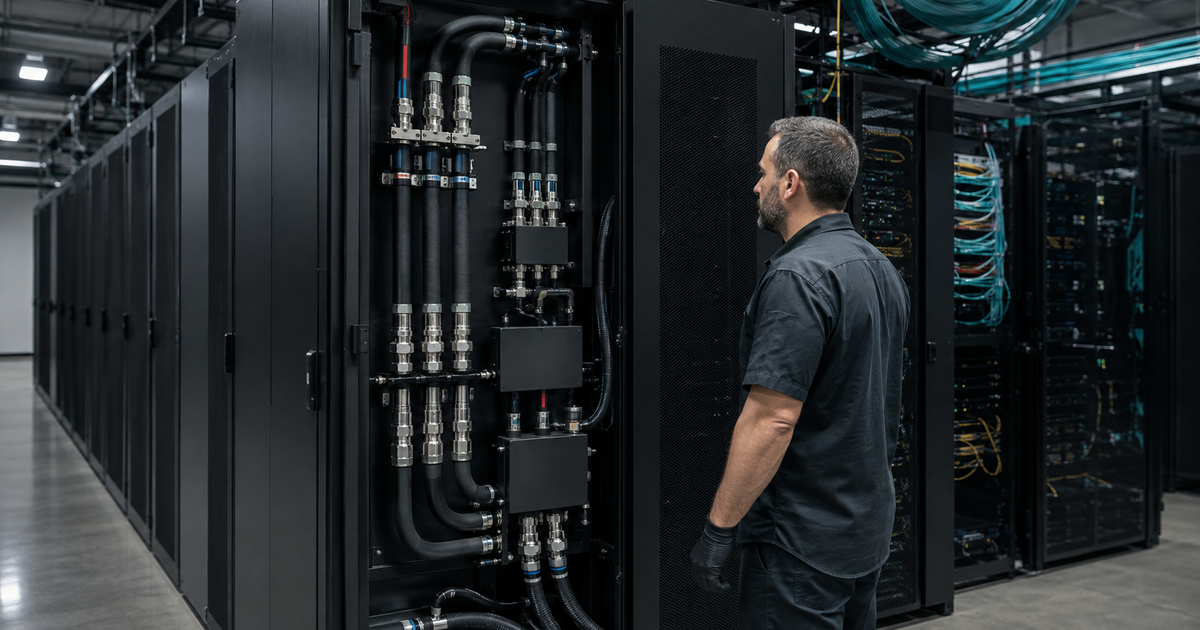
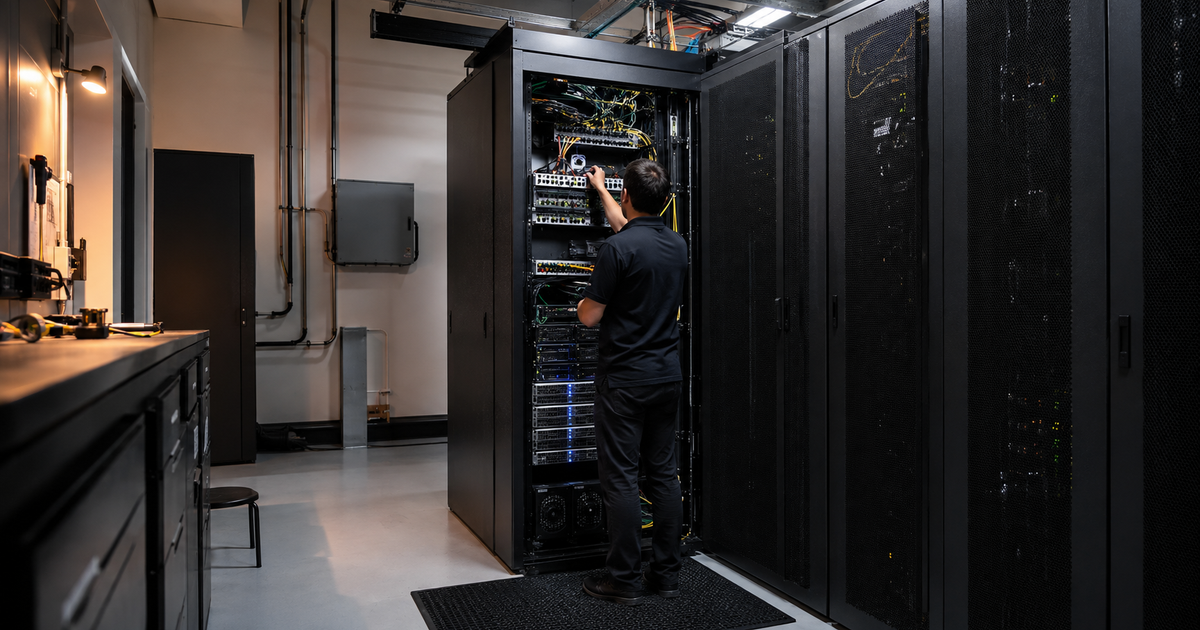
- Design the facility requirements: power, racks, optical links, storage, monitoring, security, and failure recovery.
- Put equipment provenance, warranty, spare parts, updates, and a model-and-data migration plan into the contract.
This is the work worth paying for before a large purchase. It should produce a specification, pilot results, an ownership-cost model, supplier requirements, and a staged implementation plan. If Atlas 950 delivers the required performance and is available on acceptable commercial terms, those documents become the basis of an order. If it does not, the company retains the option to choose another platform without losing the whole project.
Buy now or wait?
Buying Atlas 950 “right now” as a volume product would be premature: Huawei gives Q4 2026 as its availability date, and there are no open independent tests of the complete system yet. Starting a project now is reasonable. A company can test its model on Ascend, determine cluster size, prepare its facility, and obtain comparable terms from multiple suppliers.
Chinese AI servers are becoming a practical option for businesses that need on-premises models, control over data, and a second source of compute infrastructure. But the decisive number will not be the 1,024 accelerators on display or the 8,192 in the specification. It will be the result of a customer workload pilot: the cost of a production request, what happens when a node fails, and whether the local team can restore the system without waiting for help from China. Until a supplier answers those questions in a test and a contract, Atlas 950 is not a purchase. It is a candidate for one.