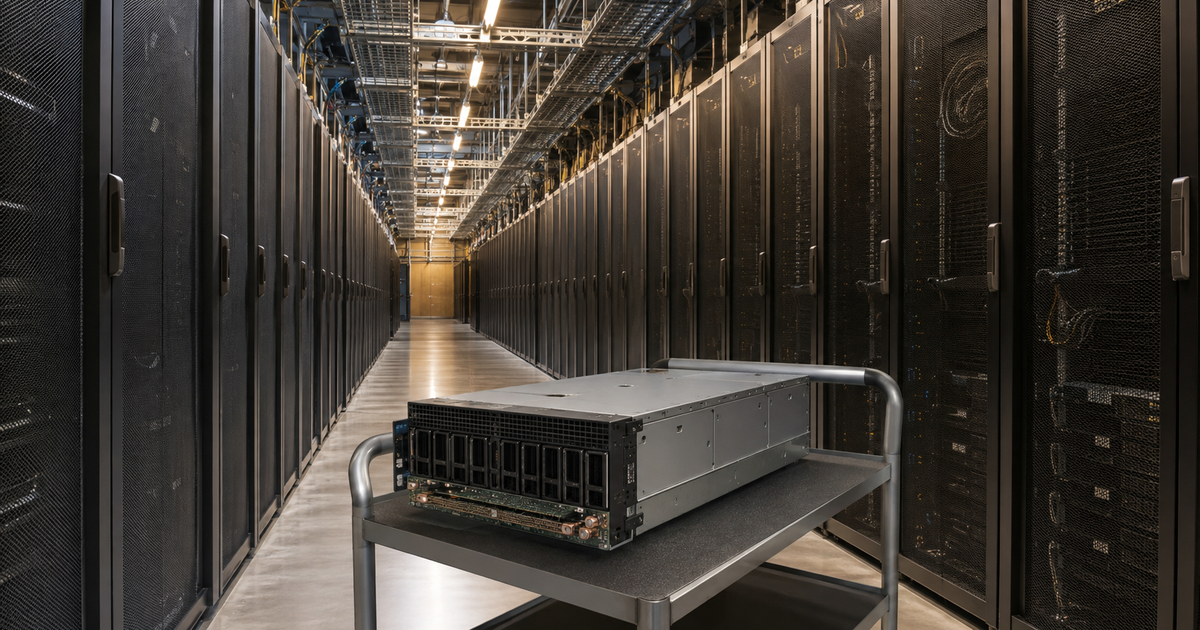
On September 1, TechRadar Pro reported that the Supermicro Super AI Station was on sale for $92,887.47 before tax and shipping. That is one retail configuration based on NVIDIA GB300, not a universal price for every workstation using the processor.
It is intended for developers who need to run large models on their own equipment. The computer can sit beside desks or mount in a server rack. Its main distinction from an ordinary powerful PC is the amount of memory available to the model.
Why hundreds of gigabytes matter
Running a model requires loading its parameters, the numbers used to calculate an answer, into memory. Intermediate data also occupies memory, including data needed for long requests. Requirements depend on the model, the precision used to store its parameters and the number of concurrent requests.
How the 748 GB is arranged
Supermicro's specifications list 252 GB of HBM3e attached to the Blackwell Ultra accelerator and 496 GB of LPDDR5X attached to the Grace CPU. Together they provide 748 GB of addressable system memory. HBM3e transfers data to the accelerator faster; accessing CPU memory has different speed constraints.
Adding these capacities is valid. Treating the sum as equivalent to 748 GB of fast accelerator memory is not. Frequent access to data in the slower part can limit performance. The effect depends on data placement and the software in use.
A computer beside the desk
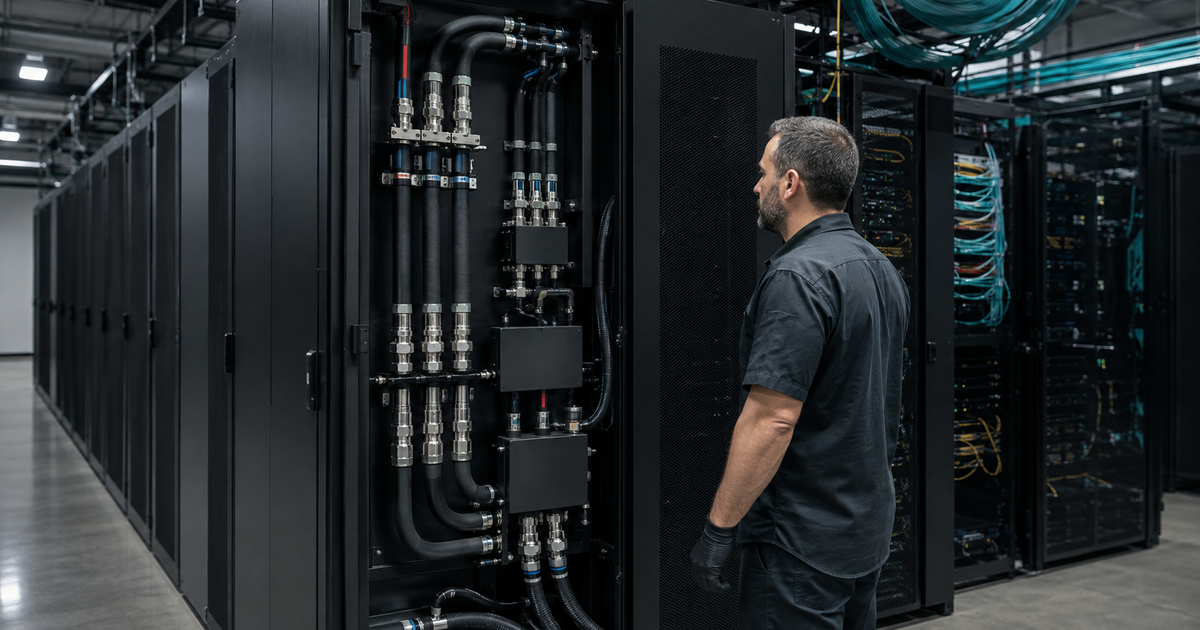
Supermicro describes the chassis as a tower that can also occupy five rack units, or 5U, in a server cabinet. A closed liquid-cooling loop sits inside. It does not need pipes connected to building cooling as a large AI rack does.
The specifications list Ubuntu with NVIDIA developer tools and a 1600 W power supply. That is the supply’s rating, not measured consumption for every model.
How a trillion-parameter model fits
In the Super AI Station description, the vendor claims support for models up to a trillion parameters. Their storage size depends on how many bits represent each number.
At four bits per parameter, a trillion numbers occupy about 500 GB in decimal units. That counts parameters alone, before supporting data and memory for processing a request. They cannot fit entirely within 252 GB of HBM3e. The extra 496 GB attached to Grace allows data to reside outside accelerator memory, but performance depends on how software distributes computation and access to that data.